
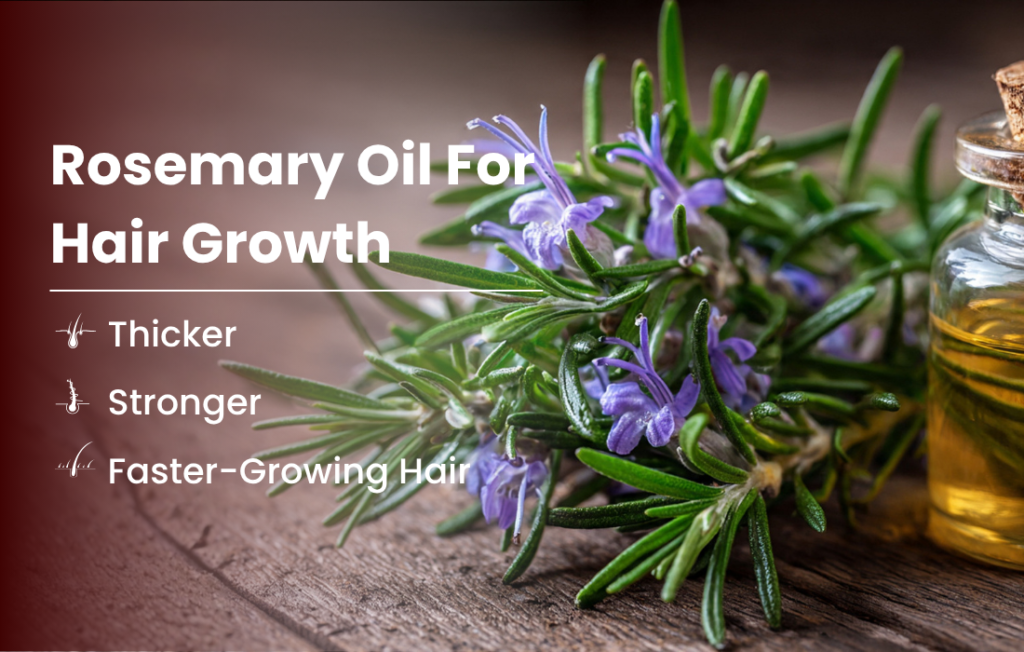

Rosemary oil for hair growth is no longer a fringe wellness tip — it is one of the most clinically supported natural hair care ingredients available today. Walk into any pharmacy, open any hair care app, or scroll through short-form video content, and rosemary oil is everywhere.
But most of what you find online skips the part that actually matters: why it works, what happens at the follicle level, and how to use it correctly to see real results.
This guide covers all of it — backed by science, structured for clarity, and written for anyone who is serious about their hair.
What Is Rosemary Oil?
Rosemary oil is an essential oil extracted from the leaves of Rosmarinus officinalis, an aromatic herb native to the Mediterranean. It is produced through steam distillation, which captures the plant’s bioactive compounds in concentrated form.
Key constituents include:
- 1,8-cineole — supports scalp circulation and follicle stimulation
- Ursolic acid — inhibits the DHT-producing enzyme linked to hair loss
- Rosmarinic acid — antioxidant and anti-inflammatory properties
- Alpha-pinene and camphor — antimicrobial action on the scalp
In hair care, rosemary oil is used either as a diluted essential oil blended with carrier oils or as an active ingredient in shampoos, scalp serums, and hair treatments.
Does Rosemary Oil Really Work for Hair Growth? The Science
This is where rosemary oil separates itself from most natural hair care ingredients. It is not just backed by tradition — it is backed by a clinical trial.
A landmark 2015 study published in the journal(pubmed) SKINmed compared rosemary oil directly against minoxidil 2% — one of the most commonly prescribed hair loss treatments in the world. After six months, both groups showed comparable hair regrowth. Rosemary oil produced no reduction in results — and caused significantly less scalp itching than minoxidil.
That study changed how dermatologists and trichologists view rosemary oil.
Here is how it works at the biological level:
1. Improves Scalp Blood Circulation
Rosemary oil stimulates microcirculation — the flow of blood through the tiny capillaries feeding your hair follicles. More blood flow means more oxygen, more nutrients, and more cellular activity at the root. This is the foundational mechanism behind hair regrowth.
2. Blocks DHT — The Hormone Behind Pattern Hair Loss
Ursolic acid in rosemary oil inhibits 5-alpha reductase, the enzyme that converts testosterone into DHT (dihydrotestosterone). DHT gradually miniaturises hair follicles, which is the primary driver of androgenetic alopecia in both men and women. By reducing DHT activity at the scalp, rosemary oil helps protect follicles from this damage.
3. Reduces Scalp Inflammation
Chronic scalp inflammation is an under-discussed cause of hair thinning. The rosmarinic acid and antioxidants in rosemary oil help neutralise oxidative stress and soothe inflamed follicles — creating a healthier environment for sustained growth.
4. Strengthens the Hair Shaft
Rosemary oil reinforces the hair strand itself, reducing breakage and helping more hairs complete a full growth cycle before shedding. The result is visibly denser, thicker-looking hair over time.
Benefits of Rosemary Oil for Hair — What You Can Actually Expect
Promotes Hair Regrowth
Whether you are dealing with diffuse thinning, a receding hairline, or postpartum hair loss, rosemary oil has shown real, consistent results with regular scalp application. Dormant follicles are encouraged to re-enter the active growth phase. Most users who are consistent report visible improvements in density within 90 to 180 days.
Reduces Hair Fall
One of the first things people notice when using rosemary hair oil is that less hair collects in the shower drain and on the hairbrush. This happens because rosemary prolongs the anagen (active growth) phase and delays the telogen (shedding) phase — more retention, less fall.
Clears Dandruff and Soothes the Scalp
The antifungal and antimicrobial properties of rosemary oil make it effective against the fungal imbalance that causes dandruff. It also regulates sebum production, which benefits both dry and oily scalp types, and relieves persistent itching and irritation.
Adds Thickness, Shine, and Manageability
Regular use improves the physical quality of the hair strand — hair looks and feels thicker, reflects more light, and is easier to detangle. For fine or limp hair especially, the volumising effect is one of rosemary oil’s most appreciated benefits.
Slows Premature Greying
Rosemary oil is known to stimulate melanocytes — the pigment-producing cells in hair follicles. Regular scalp application may help slow premature greying, particularly when incorporated early. This is one of the reasons it has been a staple in traditional European hair care for centuries.
How to Use Rosemary Oil for Hair Growth — 3 Proven Methods
Most people who do not see results from rosemary oil are not using it correctly.
Method 1: Scalp Oil Massage (Most Effective)
This is the gold standard application method.
What you need: 5–6 drops rosemary essential oil + 2 tablespoons of carrier oil (coconut, jojoba, or castor oil)
How to do it:
- Warm the carrier oil slightly
- Mix in the rosemary essential oil
- Part your hair into sections and apply directly to the scalp — not the hair length
- Massage in circular motions for 5–10 minutes
- Leave on for a minimum of 1 hour, or overnight if possible
- Leave on for a minimum of 1 hour, or overnight if possible
Frequency: 2–3 times per week
The massage itself matters as much as the oil. Mechanical stimulation of the scalp alone has been shown to increase hair thickness — combined with rosemary oil, the effects compound.
Method 2: Add to Your Shampoo
Mix 4–5 drops of rosemary essential oil into your single-use amount of shampoo. Work it into the scalp for 2–3 minutes before rinsing. This is less potent than a dedicated treatment but builds consistent daily exposure without extra steps.
Method 3: Rosemary-Infused Hair Rinse
Simmer fresh rosemary sprigs in two cups of water for 15 minutes. Let it cool, strain it, and use it as a post-shampoo rinse — pour over the scalp and hair, leave for 5 minutes, then rinse with cool water. Adds shine, reduces inflammation, and smells exceptional.
Important Tips for Best Results
Always dilute — never apply undiluted rosemary essential oil directly to the scalp. Use a 2–3% concentration (roughly 5–6 drops per tablespoon of carrier oil)
Be consistent — meaningful results require at least 8–12 weeks of regular use. Do not stop after two weeks, expecting dramatic change
Combine with scalp massage — the two together produce compounding results
Store correctly — keep your blend in a dark glass bottle away from heat and sunlight, which degrade essential oils quickly
Patch test first — apply to your inner wrist 24 hours before the first scalp use, especially if you have sensitive skin
Who Should Use Rosemary Oil for Hair?
Rosemary hair oil is suitable for virtually all hair types. It is particularly beneficial for:
- Androgenetic alopecia (genetic hair thinning) in men and women
- Postpartum or stress-induced hair loss
- Slow hair growth and low density
- Persistent dandruff or scalp inflammation
- Fine, limp, or dull hair that needs a natural lift
It is generally safe for all scalp types. Pregnant women should consult their doctor before using rosemary essential oil, as it is a potent botanical compound requiring appropriate guidance during pregnancy.
Frequently Asked Questions About Rosemary Oil for Hair
How long does rosemary oil take to show results for hair growth?
Most users see a noticeable difference between 10 and 24 weeks of consistent use. Visible density improvement typically appears around the 3–6 month mark.
Can I leave rosemary oil in my hair overnight?
Yes — overnight application is actually one of the most effective methods. Dilute properly in a carrier oil, apply to the scalp, and wash out in the morning with a mild shampoo.
Is rosemary oil better than minoxidil?
The 2015 SKINmed clinical trial found comparable regrowth results between rosemary oil and minoxidil 2%, with fewer side effects. Rosemary oil is a strong natural alternative, particularly for those in the early stages of hair thinning or those seeking a side-effect-free option.
Can I use rosemary oil on an oily scalp?
Yes. Rosemary oil helps regulate sebum production and has antimicrobial properties — it is well-suited for oily, dandruff-prone scalps when used at the correct dilution.
Which carrier oil works best with rosemary oil for hair growth?
Castor oil is ideal for growth-focused applications due to its ricinoleic acid content. Jojoba is excellent for oily scalps. Coconut oil works well for dry or damaged hair types.
Rosemary oil for hair growth is not a trend that will fade — it is one of the most substantiated natural hair care ingredients in use today, with a clinical trial, a clear biological mechanism, and consistent real-world results supporting it.
It is not a quick fix. It is a commitment to long-term scalp and hair health. When used consistently, correctly, and with patience, it delivers on every promise.
At Havintha, our rosemary hair oil is formulated with cold-pressed carrier oils and a carefully calibrated concentration of rosemary essential oil — designed for maximum efficacy with zero harsh additives.
Start simple. Pick a method. Be consistent. Let the results speak.


