
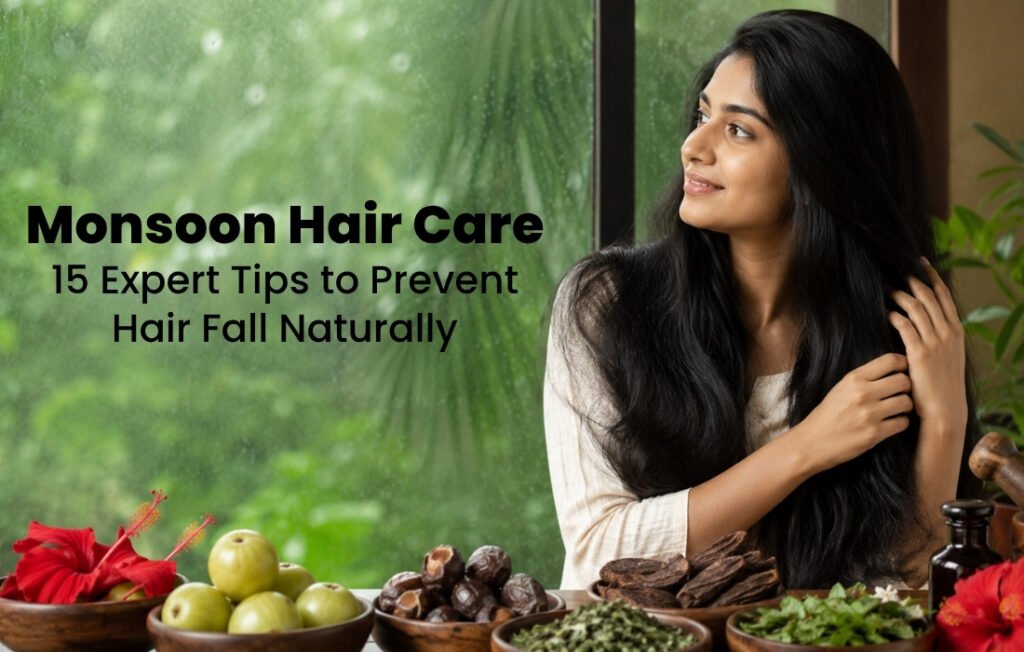

Monsoon Hair Care: Your Complete Guide to Healthy Hair During the Rainy Season
Humidity during the monsoon can make your scalp oilier, increase dandruff, weaken hair roots, and leave hair frizzy.
A simple routine that includes gentle cleansing, regular scalp care, proper drying, and traditional herbs like Amla, Reetha, Shikakai, Bhringraj, and Hibiscus can help maintain healthier hair throughout the season.
Have You Ever Wondered Why Your Hair Behaves So Differently During Monsoon?
One week, your hair is soft, smooth, and easy to manage. Then the rainy season sets in, and suddenly everything changes.
Your scalp becomes oily by afternoon.
Hair starts falling more than usual.
Frizz refuses to settle.
You notice dandruff on your shoulders.
If this sounds familiar, you’re not alone.
Monsoon is one of the most challenging seasons for hair care. The combination of high humidity, sweat, rainwater, pollution, and fungal growth creates an environment where your scalp needs more attention than usual.
The good news?
A few simple changes to your routine—and time-tested natural ingredients—can help keep your scalp healthier and your hair looking its best throughout the season.
Let’s understand why.
Why Does Hair Fall Increase During Monsoon?
Hair naturally goes through cycles of growth, rest, and shedding throughout the year. During the rainy season, several environmental factors can make shedding feel more noticeable.
These include:
- High humidity causing hair strands to swell
- Excess oil production on the scalp
- Sweat mixing with dust and pollution
- Reduced scalp hygiene because hair takes longer to dry
- Increased dandruff and fungal overgrowth
- Weakening of already damaged hair shafts
While some seasonal shedding is common, persistent or excessive hair loss may have other causes and should be discussed with a healthcare professional.
The key is to create a routine that supports a clean, balanced scalp without stripping away its natural moisture.
7 Common Hair Problems During Monsoon
1. Hair Fall
Humidity can make weak strands break more easily, while an oily scalp may contribute to buildup that affects scalp comfort.
2. Frizz
Hair absorbs moisture from humid air, making the outer cuticle lift and creating that familiar frizzy look.
3. Oily Scalp
Even if your hair feels dry, your scalp may produce more oil during humid weather.
4. Dandruff
Warm, damp conditions can encourage the growth of microorganisms associated with dandruff, especially if the scalp isn’t cleansed regularly.
5. Itchy Scalp
A combination of sweat, product buildup, and humidity can leave the scalp feeling irritated.
6. Flat Hair
Moisture in the air can weigh hair down, reducing volume and making it appear limp.
7. Tangles and Breakage
Wet hair is more elastic and can break more easily if handled roughly.
A Simple Monsoon Hair Care Routine
Step 1: Cleanse Your Scalp Gently
Instead of washing more frequently with harsh cleansers, focus on removing excess oil and buildup without over-drying the scalp.
Traditional cleansers made with herbs such as Reetha and Shikakai have been used for generations because they help cleanse while being gentler than many strong detergents.
Step 2: Keep Your Scalp Clean
Rainwater can contain dust and pollutants. If your hair gets soaked, rinse it with clean water as soon as possible and let it dry thoroughly.
Avoid tying up wet hair, as prolonged dampness can contribute to scalp discomfort.
Step 3: Nourish Once a Week
A weekly herbal hair pack can help refresh the scalp and condition the lengths of your hair.
Ingredients commonly used in traditional hair care include:
- Amla
- Hibiscus
- Bhringraj
Step 4: Dry Hair Properly
Never leave your hair damp for hours.
Gently pat it dry with a soft towel instead of rubbing vigorously.
Step 5: Eat for Healthy Hair
Hair health also depends on overall nutrition.
Include foods rich in:
- Protein
- Iron
- Vitamin C
- Zinc
- Omega-3 fats
A balanced diet supports healthy hair growth over time.
Why These 5 Ayurvedic Herbs Continue to Be Popular
Amla
Amla is traditionally valued for supporting strong, healthy-looking hair. It is naturally rich in vitamin C and antioxidants, making it a common ingredient in hair care routines.
It is often chosen by people looking to improve shine and reduce the appearance of dryness.
Reetha
Reetha, also known as soapnut, contains natural cleansing compounds called saponins.
It helps remove excess oil and impurities while being gentler than many harsh cleansers, making it a traditional choice for scalp cleansing.
Shikakai
Known as the “fruit for hair,” Shikakai has been used for generations as a natural cleanser.
It helps wash away dirt while leaving hair feeling softer and easier to manage.
Bhringraj
Bhringraj has a long history in Ayurvedic hair care and is often included in routines focused on maintaining healthy hair and scalp condition.
Many people use it as part of a regular nourishment routine.
Hibiscus
Hibiscus is traditionally used to help condition the hair, improve softness, and reduce the appearance of frizz.
It is especially popular among people with dry or dull hair.
DIY Monsoon Hair Pack
You can make a simple herbal hair pack at home using:
- 2 tablespoons Amla powder
- 2 tablespoons Hibiscus powder
- 1 tablespoon Bhringraj powder
- Warm water or aloe vera gel
Mix into a smooth paste.
Apply from scalp to ends.
Leave for 20–30 minutes.
Rinse with a gentle herbal cleanser.
If sourcing multiple herbs separately feels inconvenient, choosing a ready-to-use herbal powder blend made with quality ingredients can offer the same simplicity while saving preparation time.
8 Mistakes That Can Make Monsoon Hair Problems Worse
- Sleeping with wet hair
- Tying hair tightly while damp
- Using very hot water
- Overwashing the scalp
- Skipping scalp cleansing after getting caught in the rain
- Using excessive heat styling
- Applying heavy oils without washing them out properly
- Ignoring persistent dandruff or scalp irritation
Small changes in these habits can make a noticeable difference over the season.
Frequently Asked Questions
What’s the Ideal Hair Wash Routine During the Monsoon?
Most people do well washing 2–3 times a week, but the ideal frequency depends on your scalp type, activity level, and how oily your scalp becomes.
Does rainwater cause hair fall?
Rainwater itself is not usually the direct cause of hair fall. However, pollutants, dirt, and prolonged moisture on the scalp may contribute to scalp issues if hair is not cleaned and dried properly.
Which herb is best for monsoon hair care?
There isn’t a single “best” herb. Amla, Reetha, Shikakai, Bhringraj, and Hibiscus each serve different purposes—from cleansing and conditioning to supporting overall scalp health.
Can I use a herbal hair pack every week?
For many people, using a herbal hair pack once a week is a practical routine. If you have a sensitive scalp or an underlying skin condition, consider patch-testing first or consulting a dermatologist.
Should I oil my hair during monsoon?
Light oiling before washing may suit some hair types, but leaving heavy oil on the scalp for long periods in humid weather may not be comfortable for everyone.
Is frizz normal during the rainy season?
Yes. Humidity causes hair to absorb moisture from the air, making it more prone to frizz. Using conditioning ingredients like Hibiscus and avoiding excessive heat styling can help improve manageability.
Final Thoughts
Monsoon doesn’t have to mean months of bad hair days.
Understanding how humidity affects your scalp and choosing a simple, consistent routine can go a long way toward reducing common seasonal concerns like frizz, oiliness, and breakage.
Traditional ingredients such as Amla, Reetha, Shikakai, Bhringraj, and Hibiscus have remained part of Indian hair care for generations because they offer a gentle, plant-based approach to cleansing and conditioning. Whether you prepare them yourself or choose a ready-to-use herbal powder blend, consistency matters more than complexity.
Healthy hair starts with a healthy scalp—and a routine you can realistically follow throughout the season.

